By Leen Shami
How Tabby Used Financial Data to Increase Approvals by 8.9% and Accelerate Merchant Onboarding by 2×
Tabby is a leading Buy Now, Pay Later (BNPL) provider in the Middle East, offering shoppers flexible, interest-free payments while ensuring merchants receive full payment upfront.
As Tabby scaled across KSA and the UAE, improving credit decisioning became a priority. The goal was clear: approve more customers without increasing risk.

Tabby partnered with Lean to integrate real-time financial data into its credit decisioning. Following strong results, this approach was later extended to merchant onboarding using real-time verification.
Challenge
As Tabby grew, its ability to make accurate, scalable decisions was put under pressure across both shopper and merchant journeys.
On the shopper side, traditional credit assessment methods became a limiting factor. A growing share of shoppers, including expats, non-salaried earners, and first-time borrowers, had limited or thin credit histories. Bureau data alone could not reliably assess them, resulting in missed approvals despite strong underlying financial behavior. Increasing approvals without better data also risked raising default rates.
Tabby also identified an opportunity to raise credit limits for existing users with strong repayment histories. Reassessing these shoppers required more current, detailed financial information than was available in legacy data sources.
On the merchant side, rapid growth introduced operational strain. In KSA, freelance businesses accounted for 48% of applications, alongside registered businesses requiring validation of credentials, business activity, and payout details. Verification relied on manual checks across fragmented sources, leading to delays, resubmissions, and increased operational overhead as volumes scaled.Across both areas, decision-making relied on incomplete data and manual processes not designed to support continued growth.
Solution
Tabby integrated Lean’s Open Banking Data into its credit decisioning, enabling real-time, behavior-based assessments.
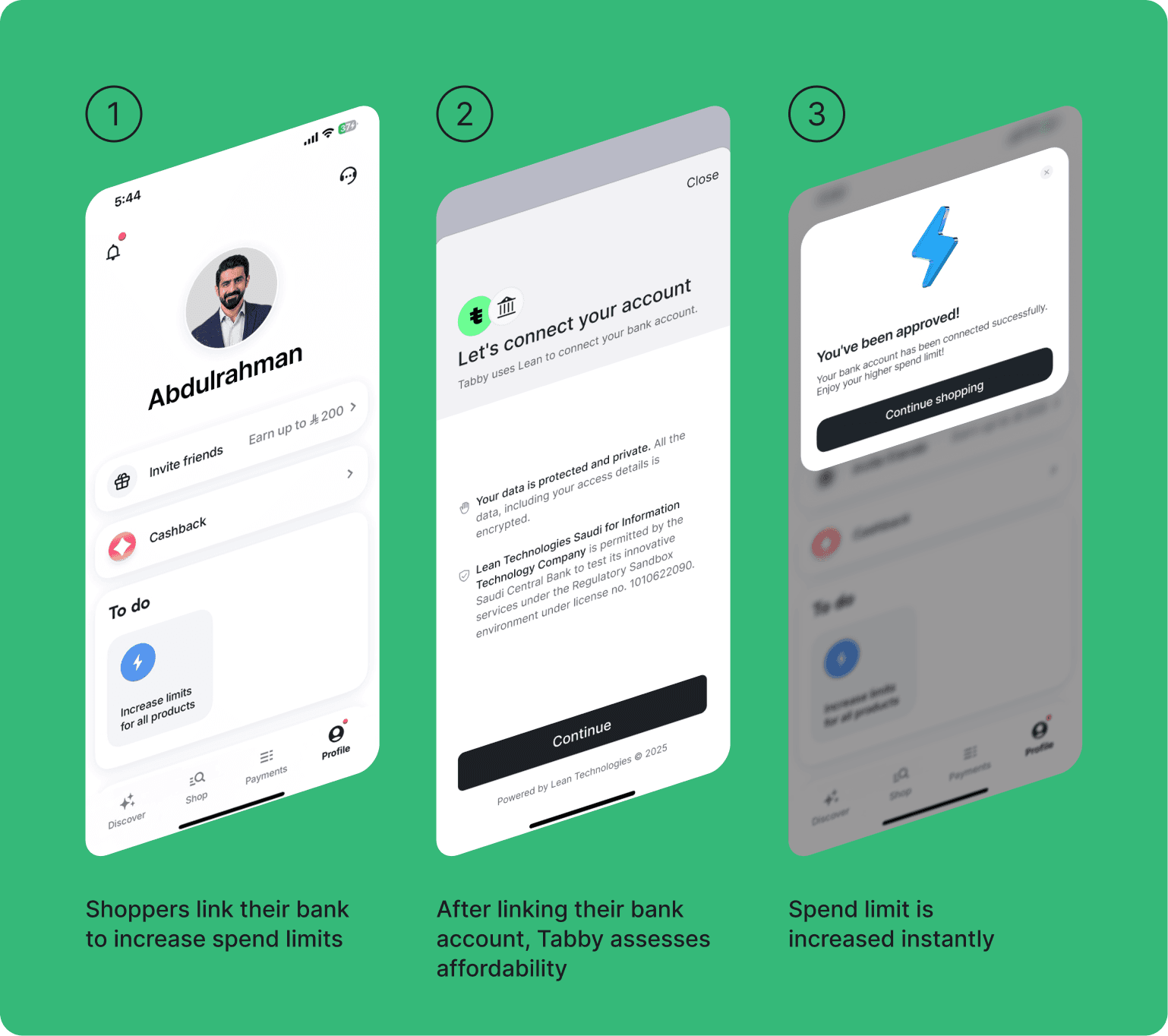
At checkout, shoppers could securely connect their bank accounts, giving Tabby visibility into income, spending patterns, and account stability. This allowed for more accurate eligibility decisions, particularly for those who could not be reliably assessed using traditional data.
For shoppers who were initially declined, Tabby introduced additional eligibility journeys to reassess their creditworthiness. This allowed them to be reassessed in real time, recovering demand and revenue that would otherwise have been lost.
Tabby also introduced a credit limit increase flow for selected UAE cardholders using Lean’s Open Banking Data. Shoppers were invited to securely connect their bank accounts and check eligibility for higher limits based on their real-time financial behavior, giving Tabby a scalable way to reassess and extend credit for users with strong repayment track records.
On day one, connection volumes reached 17× the daily baseline, demonstrating strong shopper willingness to share financial data in exchange for better credit outcomes.
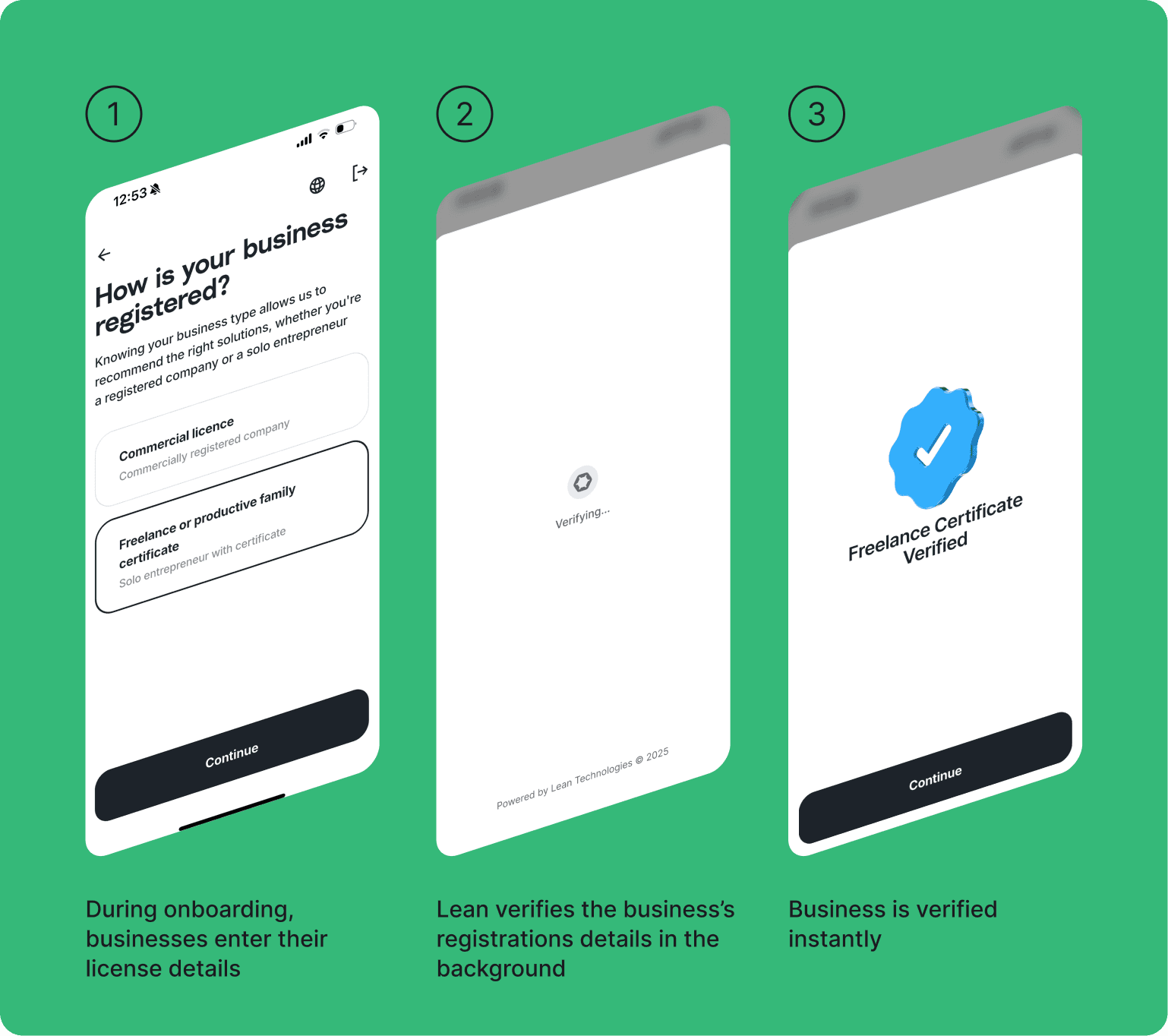
Building on the success of this approach for shoppers, Tabby extended a real-time, data-driven approach to merchant onboarding using Lean’s Verification Suite. Freelancer credentials, business registration details, and payout account ownership are validated in real-time, replacing manual checks with consistent, automated verification.
Results
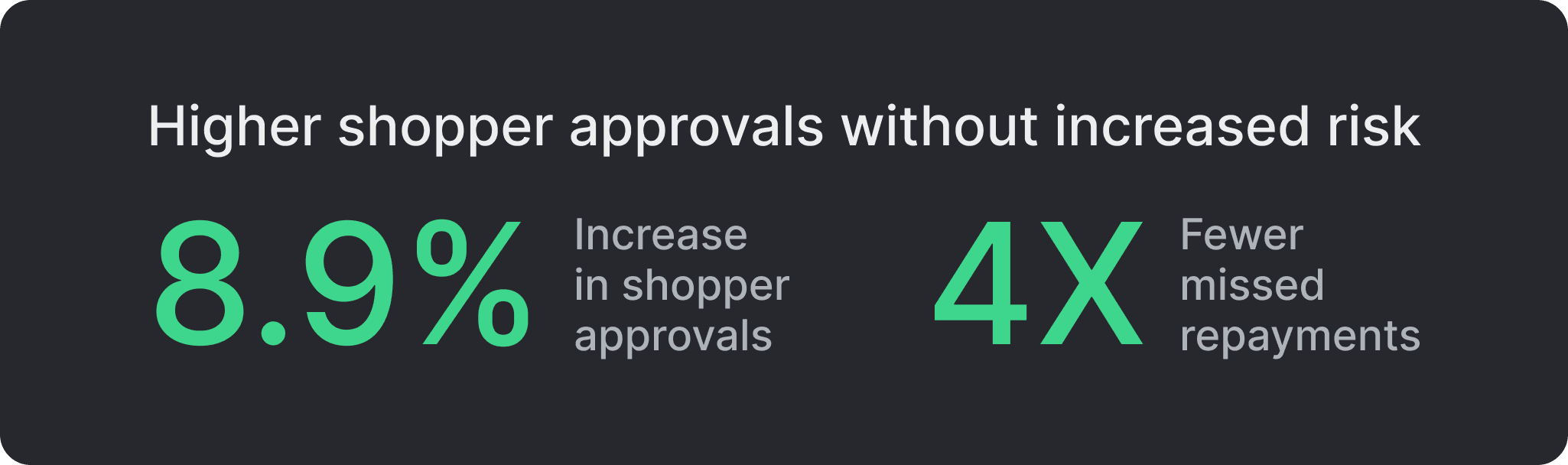
Tabby improved approval rates while reducing repayment risk, strengthening the overall quality of its credit decisions.
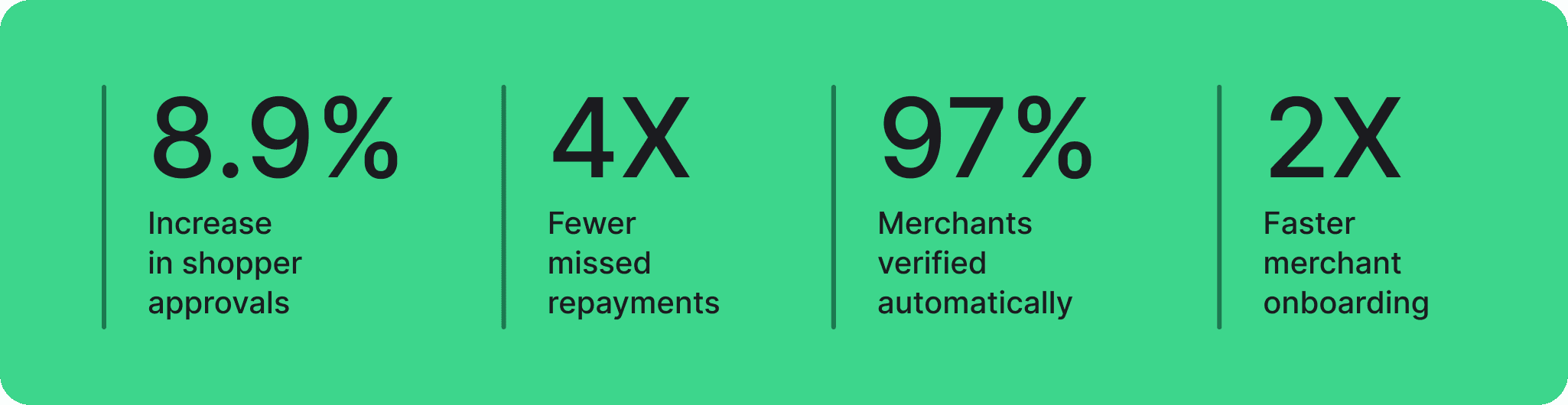
- 8.9% increase in shopper approvals
- By bringing real-time financial data into its eligibility flow, Tabby increased approval rates by 8.9% among shoppers who connected their bank accounts through Lean.
- 4× fewer missed repayments
- With clearer visibility into real income and spending behavior, Tabby improved affordability assessments, reducing missed repayments and strengthening credit performance as approvals scaled.
Applying real-time decisioning to onboarding reduced manual effort and accelerated merchant activation.
- 97% of merchants verified automatically
- License-related onboarding issues fell from 9.4% to 3.1%, allowing 97% of merchant applications to pass verification without friction and reducing onboarding rework.
- 2x faster merchant application onboarding
- Automated merchant onboarding reduced manual review time and accelerated onboarding by 2x.

Continue reading
How Tamara Expanded Credit Access by 32% for the Modern Workforce with Financial Data
Tamara is Saudi Arabia’s homegrown FinTech platform, empowering millions of customers and thousands of merchants with innovative financial solutions. Founded in Riyadh, Tamara’s mission is clear: “We help people own their dreams”. Guided by this purpose, Tamara offers simple and flexible payments solutions, designed around how people manage their finances, inspiring greater control and confidence in their daily lives.
Making Housing More Accessible: How Rize Used Lean’s Open Banking Data to Cut Rejection Rates From 60% to 38%
Guide: How Open Banking Enhances Credit Risk Assessment for Consumer Lenders
The financial landscape in Saudi Arabia is evolving, and Open Banking is at the forefront of this transformation. Traditional credit risk assessment methods, which rely on manual processes and limited data, are becoming less effective. Our guide explores how Open Banking provides lenders with real-time, comprehensive financial data, enabling more accurate risk assessments and more efficient lending processes.